
Services
All Your Radiological Needs at One Place

Chemoport Insertion
The implantable subcutaneous venous access port or chemoport is a common procedure in patients requiring long-term venous access. Chemoport provides safe, easy and cosmetically pleasant venous access. Image-guided chemoport insertion by interventional radiologist gives low periprocedural complication rates. Using right IJV as the entry site, the image guidance gives good success rate with least complication.
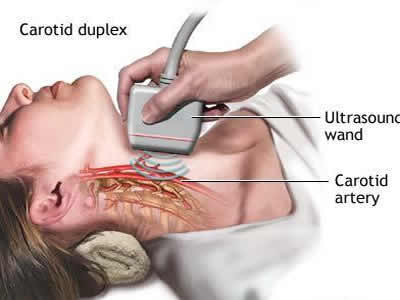
Vascular Ultrasound
Vascular ultrasound uses sound waves to evaluate the body’s circulatory system and help identify blockages in the arteries and veins and detect blood clots. A Doppler ultrasound study – a technique that evaluates blood flow through a blood vessel – is usually part of this exam. Ultrasound does not use ionizing radiation, has no known harmful effects, and provides images of soft tissues that don’t show up on x-ray images.
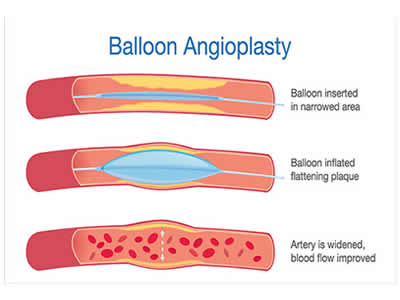
Angioplasty & Stenting
Use of a balloon catheter to open blocked blood vessels which restores blood flow. A Stent may then be permanently left in place to prevent the artery from blocking again. A guide wire is moved into and across the blockage. A balloon catheter is pushed over the guide wire and into the blockage. The balloon on the end is blown up (inflated). This presses the plaque or blood clot against the sides of the artery, making more room for blood flow. A stent may then be placed in the blocked area.
Fluoroscopy is used during the surgery. Fluoroscopy is a special type of X-ray that’s like an X-ray “movie.” It helps the doctor find the blockages in the heart arteries as a contrast dye moves through the arteries
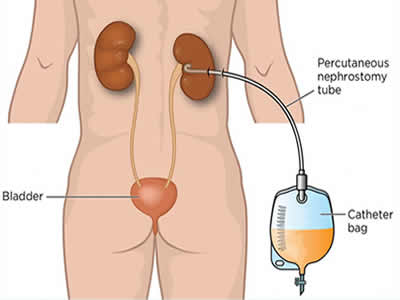
Nephrostomies
A nephrostomy is an opening between the kidney and the skin. A nephrostomy tube is a thin plastic tube that is passed from the back, through the skin and then through the kidney, to the point where the urine collects. Its job is to temporarily drain the urine that is blocked. This allows the kidney to function properly and protects it from further damage. It also helps clear any infection.

Biliary Drainage
Biliary drainage is the insertion of a tube into the bile duct. This is most commonly carried out when the bile ducts are blocked. The bile ducts normally allow bile to drain from the liver to the small intestine. When the bile ducts are blocked, bile cannot leave the body and builds up. This build-up produces a yellow colour in the skin called jaundice and can also cause itching and dark urine.
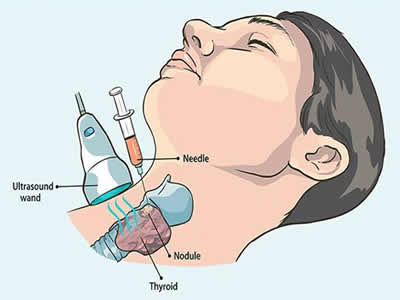
Ultrasound Guided FNAC
An ultrasound-guided fine needle aspiration biopsy uses sound waves to help locate a nodule or abnormality within the thyroid and remove a tissue sample for examination under a microscope. The procedure is less invasive than surgical biopsy, leaves little to no scarring and does not involve exposure to ionizing radiation. This procedure requires little to no special preparation. Tell your doctor about any medications you’re taking, such as aspirin or blood thinners.

Thrombolysis
Through use of lytic drugs to dissolve blood clots that restrict blood flow in major veins and arteries which pose potentially life-threatening implications.
This therapy can reverse or reduce the adverse effects of: · Blocked arteries of the brain (stroke).
· Blocked arteries of the heart (heart attack). · Blocked arteries of the lung (pulmonary embolism). · Blocked veins of the leg (deep vein thrombosis/DVT).
· Blocked arteries of the leg (acute arterial thrombosis /leg ischemia). · Blocked surgical bypasses, blocked dialysis fistulas or catheters.
Aneurysm Coiling
A brain aneurysm is a condition where an abnormal, outward swelling of an artery in the brain can rupture, causing a serious stroke or death. Bleeding aneurysms can compress surrounding brain tissue or cranial nerves that causes severe headaches. Coiling is a technique which closes off the blood flow into the aneurysm by packing it tightly with detachable platinum coils by use of X-ray guidance through a catheter from the groin extending to the brain. A micro catheter is
inserted into the femoral artery in the groin, and advances it through many twists and loops of vessels to reach the site of the bleed. A coil can stop a ruptured aneurysm from continuing to bleed, or prevent an unruptured aneurysm from bleeding
Dialysis access(fistula and dialysis catheters)
We offer placement of dialysis catheters, fistulas or grafts for patients who require administration of dialysis therapy.
· A tunneled catheter in your neck—temporary, because the possibility of infection is high.
· An AV fistula—taking a piece of a vein from your arm or leg and sewing it into a nearby artery, and allowing the sewn-in vein to enlarge and become thicker, like an artery. Considered the best option because it has the lowest risk of infection.
· An AV graft—the sewing of a prosthetic graft between an artery and vein in your arm or leg. The preferred option if your veins are too small for an AV fistula. AV grafts tend to close more quickly and are more prone to infection because they are not formed from natural tissue.
Just Make An Appointment & You're Done!
Making an appointment is a painstakingly easy process